Paint correction for beginners: compound, polish, protect
Swirls and haze hide your paint’s real colour. How a dual-action polisher, the right pads and patience bring back a deep, wet-looking finish.
Paint correction is the process of levelling the clear coat to remove swirl marks, light scratches and haze. Done well, it is the single biggest visual transformation you can give a car. Done carelessly, it removes clear coat you can never get back. The secret is to work gently and test first.
Understand what you are removing
Swirls are tiny scratches in the clear coat, the transparent top layer of paint. Light hits their edges and scatters, which makes the paint look dull and spider-webbed in the sun. Correction carefully removes a hair-thin layer until the surface is flat again and reflects cleanly.
Prepare the surface
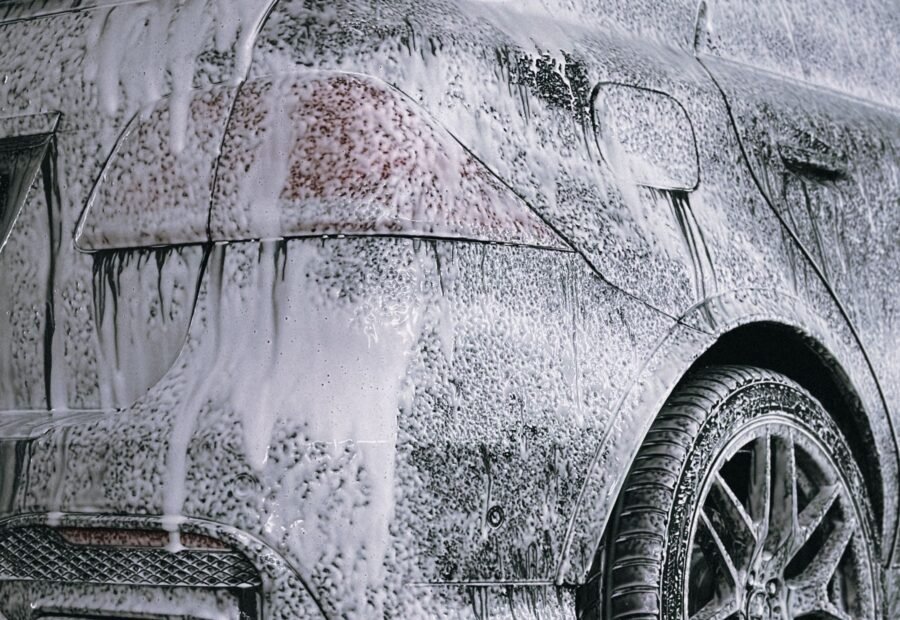
- Wash with the two-bucket method.
- Decontaminate with an iron remover and a clay bar or mitt, so you do not grind grit into the paint.
- Dry and tape rubber trim, badges and panel edges with masking tape.
- Work under good light. A strong torch held at an angle shows you exactly what is happening.
Machine, pads and products
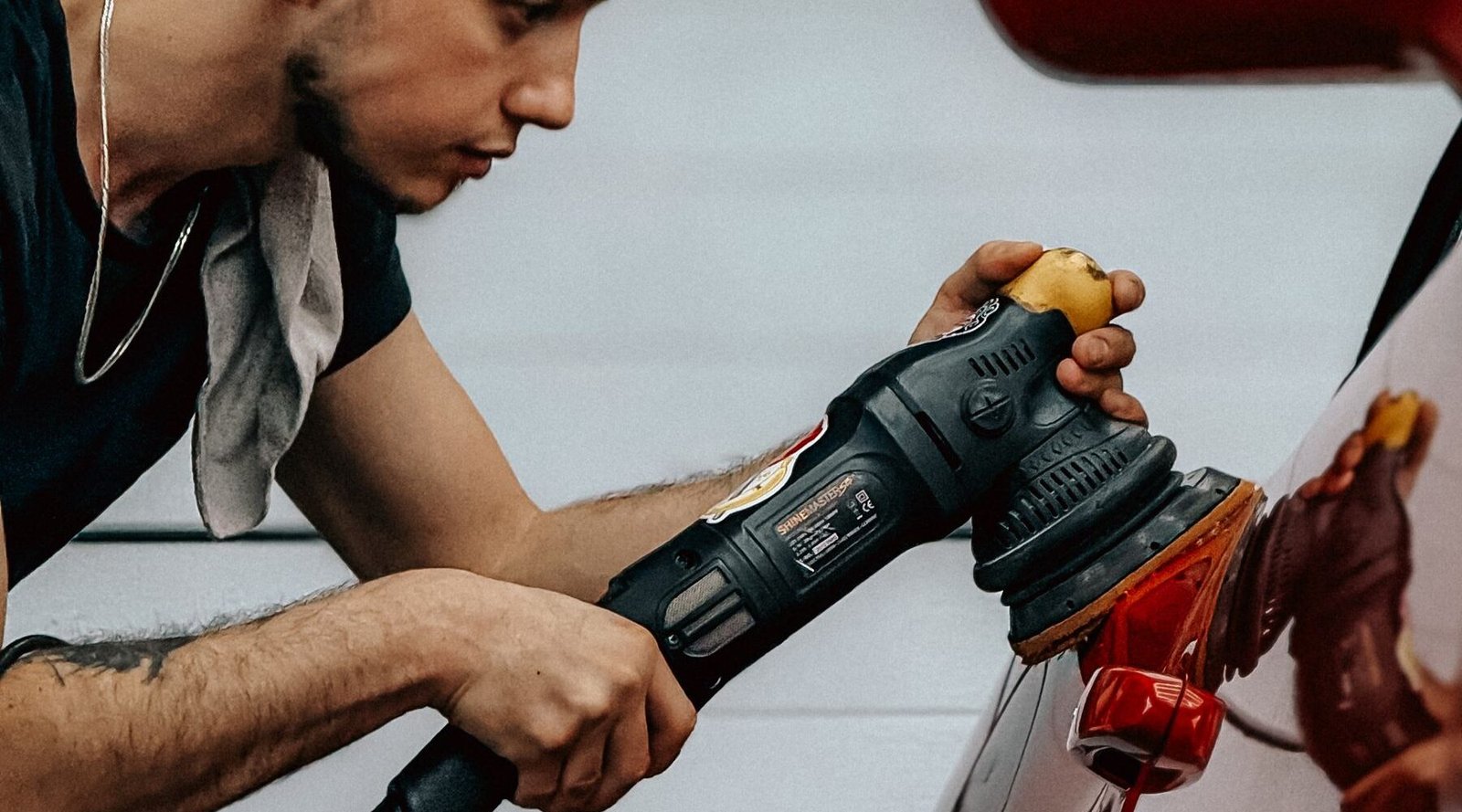
A dual-action (DA) polisher is the right tool for beginners. Its random orbit makes it far less likely to burn through paint than a rotary machine. You need two products:
- Compound: more abrasive, removes deeper defects. Use with a firmer cutting pad.
- Polish: finer abrasive, refines the finish and adds gloss. Use with a softer polishing pad.
Always do a test spot
Pick a 50 cm square on a flat panel. Start with the least aggressive combination: polish on a polishing pad. Work it in slow, overlapping passes at moderate speed with light pressure, then wipe and inspect. Only step up to compound if the defects remain. Whatever combination works on the test spot is what you use on the rest of the car.
Protect the result
Freshly corrected paint has no protection. Seal it with a wax, a paint sealant or a ceramic coating, depending on how long you want it to last. Restore faded trim at the same time so the whole car looks finished.
From then on, wash carefully and you will not need to correct again for a long time. Corrected paint, properly maintained, stays deep and glossy for years.